Top 100 Ornamental Fish Guide with 60% trade weight
"The global ornamental fish trade is a complex web of biological diversity and commercial logistics, driven by both high-volume export markets and the growing passion of home aquarists."
This Top 100 Ornamental Fish Guide identifies the most significant species based on a weighted analysis of global trade volumes and hobbyist popularity. It is designed for aquarium enthusiasts and researchers seeking to understand which freshwater, tropical, and marine species dominate the market.
This guide uses a specific formula to rank species, though it is limited by the fact that official rankings for certain segments are estimated through knowledge databases rather than direct institutional disclosure.
Key Takeaways: * Rankings are determined by a 60% weight on OFI/FAO trade volumes and a 40% weight on popularity and adaptability. * The list includes freshwater tropical, coldwater, and marine species. * Data reflects market conditions as of November 2026.
How were these species selected for the Top 100 Ornamental Fish Guide?
At midnight in the quiet office, the researcher rubs tired eyes while scrolling through data to identify each ornamental species.
A researcher sits at a desk, scrolling through endless spreadsheets of export data and biological profiles. To ensure transparency, this Top 100 Ornamental Fish Guide, which serves as the best tropical fish guide and includes a marine fish popularity list, utilizes a rigorous selection methodology.
The primary metric is a weighted formula where OFI and FAO global ornamental fish export and import transaction volumes account for 60% of the score. The remaining 40% is derived from species recognition and beginner adaptability indicators provided by FishBase and SeriouslyFish.
According to Ornamental Fish International Trade Statistics, FishBase Scientific Database, and SeriouslyFish Species Profiles, the criteria were finalized as of 2026-11-26.
This specific weighting ensures that the list reflects both commercial reality and the practical experience of the aquarium community.
Because official rankings are not publicly disclosed for every specific niche, the editorial team uses comprehensive knowledge databases to synthesize and estimate the remaining data points. This approach provides a reliable Popular Aquarium Fish List for various skill levels.
In this sequence, the first step is the most critical.
Complete Top 1–100 Ranking Table
Reference Date: 2026-11-26 · Primary Sources: https://www.fishbase.se · https://ofish.org · https://www.seriouslyfish.com
| Rank | Species (Scientific Name) | Category (Freshwater · Coldwater · Marine) | Adult Size · Temp / pH | Care Difficulty · Compatibility | Min. Tank Size |
|---|---|---|---|---|---|
| 1 | Guppy (Poecilia reticulata) | Freshwater Tropical (0 ppt) | 3-6 cm · 22-28°C · pH 6.8-7.8 | Easy · Peaceful community | 40 L (10 gal) |
| 2 | Neon Tetra (Paracheirodon innesi) | Freshwater Tropical (0 ppt) | 3-4 cm · 20-26°C · pH 6.0-7.0 | Easy · Peaceful schooling | 40 L (10 gal) |
| 3 | Goldfish (Carassius auratus) | Freshwater Coldwater (0 ppt) | 15-25 cm · 16-23°C · pH 7.0-7.8 | Easy · Solitary or species tank | 80 L (20 gal) |
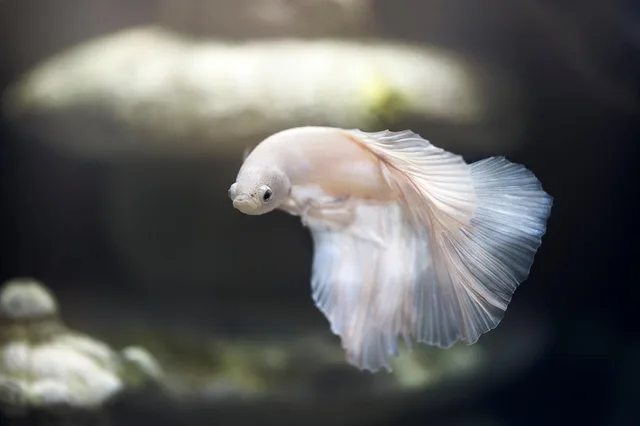
| 4 | Siamese Fighting Fish (Betta splendens) | Freshwater Tropical (0 ppt) | 5-7 cm · 24-28°C · pH 6.5-7.5 | Easy · Solitary or species tank | 20 L (5 gal) |
| 5 | Cardinal Tetra (Paracheirodon axelrodi) | Freshwater Tropical (0 ppt) | 4-5 cm · 23-27°C · pH 5.5-7.0 | Moderate · Peaceful schooling | 60 L (15 gal) |
| 6 | Platy (Xiphophorus maculatus) | Freshwater Tropical (0 ppt) | 4-6 cm · 21-26°C · pH 7.0-8.0 | Easy · Peaceful community | 40 L (10 gal) |
| 7 | Molly (Poecilia sphenops) | Freshwater Tropical (0 ppt) | 6-10 cm · 24-28°C · pH 7.2-8.2 | Easy · Peaceful community | 60 L (15 gal) |
| 8 | Swordtail (Xiphophorus hellerii) | Freshwater Tropical (0 ppt) | 10-12 cm · 22-27°C · pH 7.0-8.2 | Easy · Peaceful community | 80 L (20 gal) |
| 9 | Freshwater Angelfish (Pterophyllum scalare) | Freshwater Tropical (0 ppt) | 15-20 cm · 24-28°C · pH 6.2-7.4 | Moderate · Semi-aggressive | 120 L (30 gal) |
| 10 | Zebra Danio (Danio rerio) | Freshwater Tropical (0 ppt) | 4-5 cm · 18-25°C · pH 6.5-7.5 | Easy · Peaceful schooling | 40 L (10 gal) |
| 11 | Ocellaris Clownfish (Amphiprion ocellaris) | Marine Reef (35 ppt) | 8-11 cm · 24-27°C · pH 8.1-8.4 | Easy · Reef-safe peaceful | 80 L (20 gal) |
| 12 | Bronze Corydoras (Corydoras aeneus) | Freshwater Tropical (0 ppt) | 6-7 cm · 22-26°C · pH 6.0-7.5 | Easy · Peaceful schooling | 60 L (15 gal) |
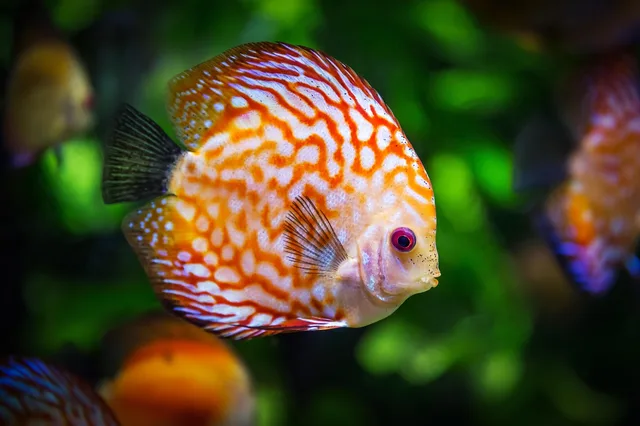
| 13 | Discus (Symphysodon aequifasciatus) | Freshwater Tropical (0 ppt) | 15-20 cm · 28-30°C · pH 5.5-6.8 | Advanced · Peaceful sensitive | 200 L (55 gal) |
| 14 | Koi (Cyprinus rubrofuscus) | Freshwater Coldwater (0 ppt) | 60-90 cm · 10-24°C · pH 7.0-8.0 | Moderate · Peaceful schooling | 1,000 L+ (Pond) |
| 15 | Bristlenose Pleco (Ancistrus cirrhosus) | Freshwater Tropical (0 ppt) | 10-15 cm · 23-27°C · pH 6.5-7.5 | Easy · Peaceful community | 80 L (20 gal) |
| 16 | Harlequin Rasbora (Trigonostigma heteromorpha) | Freshwater Tropical (0 ppt) | 4-5 cm · 22-27°C · pH 6.0-7.2 | Easy · Peaceful schooling | 40 L (10 gal) |
| 17 | Rummy-Nose Tetra (Hemigrammus rhodostomus) | Freshwater Tropical (0 ppt) | 4-5 cm · 24-28°C · pH 6.0-7.0 | Moderate · Peaceful schooling | 60 L (15 gal) |
| 18 | Cherry Barb (Puntius titteya) | Freshwater Tropical (0 ppt) | 4-5 cm · 22-27°C · pH 6.0-7.5 | Easy · Peaceful schooling | 60 L (15 gal) |
| 19 | Tiger Barb (Puntigrus tetrazona) | Freshwater Tropical (0 ppt) | 6-7 cm · 22-26°C · pH 6.5-7.5 | Easy · Semi-aggressive | 80 L (20 gal) |
| 20 | Dwarf Gourami (Trichogaster lalius) | Freshwater Tropical (0 ppt) | 5-8 cm · 24-28°C · pH 6.0-7.5 | Easy · Peaceful community | 40 L (10 gal) |
| 21 | White Cloud Mountain Minnow (Tanichthys albonubes) | Freshwater Coldwater (0 ppt) | 4 cm · 16-23°C · pH 6.5-7.5 | Easy · Peaceful schooling | 40 L (10 gal) |
| 22 | Otocinclus Catfish (Otocinclus vittatus) | Freshwater Tropical (0 ppt) | 4-5 cm · 22-26°C · pH 6.5-7.5 | Moderate · Peaceful schooling | 40 L (10 gal) |
| 23 | Panda Corydoras (Corydoras panda) | Freshwater Tropical (0 ppt) | 4-5 cm · 21-25°C · pH 6.0-7.4 | Moderate · Peaceful schooling | 60 L (15 gal) |
| 24 | Peppered Corydoras (Corydoras paleatus) | Freshwater Tropical (0 ppt) | 6-7 cm · 18-24°C · pH 6.0-7.6 | Easy · Peaceful schooling | 60 L (15 gal) |
| 25 | Regal Blue Tang (Paracanthurus hepatus) | Marine Reef (35 ppt) | 25-30 cm · 24-27°C · pH 8.1-8.4 | Moderate · Reef-safe peaceful | 400 L (100 gal) |
| 26 | Ember Tetra (Hyphessobrycon amandae) | Freshwater Tropical (0 ppt) | 2-3 cm · 22-27°C · pH 6.0-7.0 | Easy · Peaceful schooling | 30 L (8 gal) |
| 27 | Black Skirt Tetra (Gymnocorymbus ternetzi) | Freshwater Tropical (0 ppt) | 5-6 cm · 21-26°C · pH 6.0-7.5 | Easy · Peaceful schooling | 60 L (15 gal) |
| 28 | Pearl Gourami (Trichopodus leerii) | Freshwater Tropical (0 ppt) | 10-12 cm · 24-28°C · pH 6.5-7.5 | Easy · Peaceful community | 100 L (25 gal) |
| 29 | Endler's Livebearer (Poecilia wingei) | Freshwater Tropical (0 ppt) | 2.5-4 cm · 22-27°C · pH 7.0-8.0 | Easy · Peaceful community | 30 L (8 gal) |
| 30 | German Blue Ram (Mikrogeophagus ramirezi) | Freshwater Tropical (0 ppt) | 5-7 cm · 26-30°C · pH 5.5-7.0 | Moderate · Peaceful community | 60 L (15 gal) |
| 31 | Yellow Tang (Zebrasoma flavescens) | Marine Reef (35 ppt) | 18-20 cm · 24-27°C · pH 8.1-8.4 | Moderate · Reef-safe peaceful | 300 L (75 gal) |
| 32 | Oscar Cichlid (Astronotus ocellatus) | Freshwater Tropical (0 ppt) | 30-35 cm · 23-27°C · pH 6.0-7.5 | Moderate · Territorial / aggressive | 300 L (75 gal) |
| 33 | Black Neon Tetra (Hyphessobrycon herbertaxelrodi) | Freshwater Tropical (0 ppt) | 4 cm · 22-26°C · pH 6.0-7.2 | Easy · Peaceful schooling | 40 L (10 gal) |
| 34 | Blue-Green Chromis (Chromis viridis) | Marine Reef (35 ppt) | 8-10 cm · 24-27°C · pH 8.1-8.4 | Easy · Reef-safe peaceful | 120 L (30 gal) |
| 35 | Clown Loach (Chromobotia macracanthus) | Freshwater Tropical (0 ppt) | 25-30 cm · 25-29°C · pH 6.0-7.5 | Moderate · Peaceful schooling | 300 L (75 gal) |
| 36 | Kuhli Loach (Pangio kuhlii) | Freshwater Tropical (0 ppt) | 8-10 cm · 24-28°C · pH 6.0-7.0 | Easy · Peaceful community | 60 L (15 gal) |
| 37 | Japanese Rice Fish (Oryzias latipes) | Freshwater Coldwater (0 ppt) | 3-4 cm · 15-26°C · pH 6.8-7.8 | Easy · Peaceful schooling | 20 L (5 gal) |
| 38 | Celestial Pearl Danio (Danio margaritatus) | Freshwater Tropical (0 ppt) | 2-2.5 cm · 20-25°C · pH 6.5-7.5 | Moderate · Peaceful schooling | 30 L (8 gal) |
| 39 | Glowlight Tetra (Hemigrammus erythrozonus) | Freshwater Tropical (0 ppt) | 4 cm · 22-27°C · pH 6.0-7.2 | Easy · Peaceful schooling | 40 L (10 gal) |
| 40 | Serpae Tetra (Hyphessobrycon eques) | Freshwater Tropical (0 ppt) | 4-5 cm · 22-26°C · pH 6.0-7.5 | Easy · Semi-aggressive | 60 L (15 gal) |
| 41 | Royal Gramma (Gramma loreto) | Marine Reef (35 ppt) | 7-8 cm · 24-27°C · pH 8.1-8.4 | Easy · Reef-safe peaceful | 100 L (25 gal) |
| 42 | Banggai Cardinalfish (Pterapogon kauderni) | Marine Reef (35 ppt) | 8 cm · 24-27°C · pH 8.1-8.4 | Easy · Reef-safe peaceful | 100 L (25 gal) |
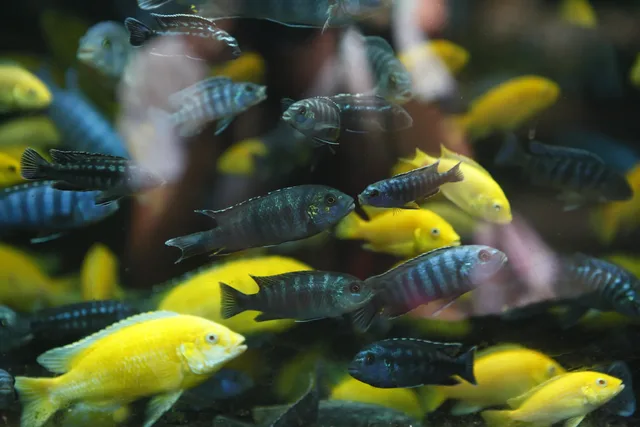
| 43 | Electric Yellow Cichlid (Labidochromis caeruleus) | Freshwater Tropical (0 ppt) | 10-13 cm · 24-27°C · pH 7.8-8.6 | Easy · Semi-aggressive | 150 L (40 gal) |
| 44 | Siamese Algae Eater (Crossocheilus oblongus) | Freshwater Tropical (0 ppt) | 12-15 cm · 24-26°C · pH 6.5-7.5 | Easy · Peaceful community | 100 L (25 gal) |
| 45 | Firefish Goby (Nemateleotris magnifica) | Marine Reef (35 ppt) | 7-9 cm · 24-27°C · pH 8.1-8.4 | Easy · Reef-safe peaceful | 60 L (15 gal) |
| 46 | Sterbai Corydoras (Corydoras sterbai) | Freshwater Tropical (0 ppt) | 6-7 cm · 24-28°C · pH 6.0-7.4 | Easy · Peaceful schooling | 80 L (20 gal) |
| 47 | Pygmy Corydoras (Corydoras pygmaeus) | Freshwater Tropical (0 ppt) | 2.5-3 cm · 22-26°C · pH 6.2-7.4 | Moderate · Peaceful schooling | 30 L (8 gal) |
| 48 | Yellow Watchman Goby (Cryptocentrus cinctus) | Marine Reef (35 ppt) | 8-10 cm · 24-27°C · pH 8.1-8.4 | Easy · Reef-safe peaceful | 80 L (20 gal) |
| 49 | Six-Line Wrasse (Pseudocheilinus hexataenia) | Marine Reef (35 ppt) | 7-8 cm · 24-27°C · pH 8.1-8.4 | Easy · Semi-aggressive | 100 L (25 gal) |
| 50 | Mandarin Dragonet (Synchiropus splendidus) | Marine Reef (35 ppt) | 7-8 cm · 24-27°C · pH 8.1-8.4 | Advanced · Peaceful sensitive | 150 L (40 gal) |
| 51 | Cockatoo Dwarf Cichlid (Apistogramma cacatuoides) | Freshwater Tropical (0 ppt) | 5-8 cm · 24-28°C · pH 6.0-7.5 | Moderate · Semi-aggressive | 60 L (15 gal) |
| 52 | Kribensis Cichlid (Pelvicachromis pulcher) | Freshwater Tropical (0 ppt) | 8-10 cm · 24-27°C · pH 6.5-7.5 | Easy · Semi-aggressive | 80 L (20 gal) |
| 53 | Convict Cichlid (Amatitlania nigrofasciata) | Freshwater Tropical (0 ppt) | 10-15 cm · 22-27°C · pH 6.8-8.0 | Moderate · Territorial / aggressive | 120 L (30 gal) |
| 54 | Chili Rasbora (Boraras brigittae) | Freshwater Tropical (0 ppt) | 2 cm · 23-28°C · pH 5.5-6.8 | Moderate · Peaceful schooling | 20 L (5 gal) |
| 55 | Boesemani Rainbowfish (Melanotaenia boesemani) | Freshwater Tropical (0 ppt) | 10-12 cm · 24-28°C · pH 7.0-8.0 | Easy · Peaceful schooling | 150 L (40 gal) |
| 56 | Dwarf Neon Rainbowfish (Melanotaenia praecox) | Freshwater Tropical (0 ppt) | 5-6 cm · 22-27°C · pH 6.8-7.8 | Easy · Peaceful schooling | 80 L (20 gal) |
| 57 | Congo Tetra (Phenacogrammus interruptus) | Freshwater Tropical (0 ppt) | 8-9 cm · 23-27°C · pH 6.0-7.2 | Moderate · Peaceful schooling | 120 L (30 gal) |
| 58 | Lemon Tetra (Hyphessobrycon pulchripinnis) | Freshwater Tropical (0 ppt) | 4-5 cm · 23-27°C · pH 6.0-7.4 | Easy · Peaceful schooling | 60 L (15 gal) |
| 59 | Diamond Tetra (Moenkhausia pittieri) | Freshwater Tropical (0 ppt) | 5-6 cm · 24-28°C · pH 6.0-7.2 | Easy · Peaceful schooling | 80 L (20 gal) |
| 60 | Honey Gourami (Trichogaster chuna) | Freshwater Tropical (0 ppt) | 4-5 cm · 23-27°C · pH 6.0-7.5 | Easy · Peaceful community | 40 L (10 gal) |
| 61 | Three Spot Gourami (Trichopodus trichopterus) | Freshwater Tropical (0 ppt) | 12-15 cm · 23-28°C · pH 6.5-7.8 | Easy · Semi-aggressive | 120 L (30 gal) |
| 62 | Sparkling Gourami (Trichopsis pumila) | Freshwater Tropical (0 ppt) | 3.5-4 cm · 24-28°C · pH 6.0-7.2 | Moderate · Peaceful community | 30 L (8 gal) |
| 63 | Rosy Barb (Pethia conchonius) | Freshwater Tropical (0 ppt) | 10-14 cm · 18-24°C · pH 6.5-7.5 | Easy · Peaceful schooling | 120 L (30 gal) |
| 64 | Odessa Barb (Pethia padamya) | Freshwater Tropical (0 ppt) | 7 cm · 18-25°C · pH 6.5-7.5 | Easy · Peaceful schooling | 100 L (25 gal) |
| 65 | Denison Barb (Sahyadria denisonii) | Freshwater Tropical (0 ppt) | 12-15 cm · 18-25°C · pH 6.5-7.8 | Moderate · Peaceful schooling | 200 L (55 gal) |
| 66 | Buenos Aires Tetra (Psalidodon anisitsi) | Freshwater Tropical (0 ppt) | 6-7 cm · 18-26°C · pH 6.0-7.8 | Easy · Semi-aggressive | 80 L (20 gal) |
| 67 | Common Pleco (Hypostomus plecostomus) | Freshwater Tropical (0 ppt) | 35-50 cm · 22-28°C · pH 6.5-7.8 | Easy · Peaceful community | 400 L (100 gal) |
| 68 | Zebra Pleco (Hypancistrus zebra) | Freshwater Tropical (0 ppt) | 8-9 cm · 26-30°C · pH 6.5-7.5 | Advanced · Peaceful sensitive | 80 L (20 gal) |
| 69 | Glass Catfish (Kryptopterus vitreolus) | Freshwater Tropical (0 ppt) | 7-8 cm · 22-26°C · pH 6.5-7.2 | Moderate · Peaceful schooling | 80 L (20 gal) |
| 70 | Pictus Catfish (Pimelodus pictus) | Freshwater Tropical (0 ppt) | 12-14 cm · 22-26°C · pH 6.5-7.5 | Moderate · Semi-aggressive | 200 L (55 gal) |
| 71 | Upside-Down Catfish (Synodontis nigriventris) | Freshwater Tropical (0 ppt) | 9-10 cm · 22-27°C · pH 6.5-7.5 | Easy · Peaceful community | 80 L (20 gal) |
| 72 | Red-Tailed Black Shark (Epalzeorhynchos bicolor) | Freshwater Tropical (0 ppt) | 12-15 cm · 23-27°C · pH 6.5-7.5 | Moderate · Territorial / aggressive | 200 L (55 gal) |
| 73 | Rainbow Shark (Epalzeorhynchos frenatum) | Freshwater Tropical (0 ppt) | 12-15 cm · 24-27°C · pH 6.5-7.5 | Moderate · Territorial / aggressive | 200 L (55 gal) |
| 74 | Bala Shark (Balantiocheilos melanopterus) | Freshwater Tropical (0 ppt) | 30-35 cm · 23-28°C · pH 6.5-7.5 | Moderate · Peaceful schooling | 450 L (120 gal) |
| 75 | Silver Dollar (Metynnis argenteus) | Freshwater Tropical (0 ppt) | 14-16 cm · 24-28°C · pH 6.0-7.5 | Easy · Peaceful schooling | 250 L (65 gal) |
| 76 | Jack Dempsey (Rocio octofasciata) | Freshwater Tropical (0 ppt) | 20-25 cm · 22-28°C · pH 6.5-7.8 | Moderate · Territorial / aggressive | 220 L (55 gal) |
| 77 | Severum Cichlid (Heros efasciatus) | Freshwater Tropical (0 ppt) | 18-22 cm · 24-28°C · pH 6.0-7.2 | Moderate · Semi-aggressive | 220 L (55 gal) |
| 78 | Frontosa Cichlid (Cyphotilapia frontosa) | Freshwater Tropical (0 ppt) | 25-35 cm · 24-27°C · pH 7.8-8.8 | Moderate · Semi-aggressive | 450 L (120 gal) |
| 79 | Peacock Cichlid (Aulonocara nyassae) | Freshwater Tropical (0 ppt) | 12-15 cm · 24-27°C · pH 7.8-8.6 | Moderate · Semi-aggressive | 200 L (55 gal) |
| 80 | Paradise Fish (Macropodus opercularis) | Freshwater Coldwater (0 ppt) | 8-10 cm · 16-26°C · pH 6.5-7.8 | Easy · Semi-aggressive | 60 L (15 gal) |
| 81 | Flame Angelfish (Centropyge loricula) | Marine Reef (35 ppt) | 10 cm · 24-27°C · pH 8.1-8.4 | Moderate · Caution with corals | 250 L (70 gal) |
| 82 | Coral Beauty Angelfish (Centropyge bispinosa) | Marine Reef (35 ppt) | 10 cm · 24-27°C · pH 8.1-8.4 | Moderate · Caution with corals | 250 L (70 gal) |
| 83 | Emperor Angelfish (Pomacanthus imperator) | Marine Reef (35 ppt) | 35-40 cm · 24-27°C · pH 8.1-8.4 | Advanced · Semi-aggressive | 600 L (180 gal) |
| 84 | Copperband Butterflyfish (Chelmon rostratus) | Marine Reef (35 ppt) | 18-20 cm · 24-27°C · pH 8.1-8.4 | Advanced · Peaceful sensitive | 400 L (100 gal) |
| 85 | Foxface Rabbitfish (Siganus vulpinus) | Marine Reef (35 ppt) | 20-24 cm · 24-27°C · pH 8.1-8.4 | Easy · Reef-safe peaceful | 300 L (75 gal) |
| 86 | Pajama Cardinalfish (Sphaeramia nematoptera) | Marine Reef (35 ppt) | 8 cm · 24-27°C · pH 8.1-8.4 | Easy · Reef-safe peaceful | 100 L (25 gal) |
| 87 | Maroon Clownfish (Premnas biaculeatus) | Marine Reef (35 ppt) | 14-16 cm · 24-27°C · pH 8.1-8.4 | Moderate · Territorial / aggressive | 150 L (40 gal) |
| 88 | Lawnmower Blenny (Salarias fasciatus) | Marine Reef (35 ppt) | 12-14 cm · 24-27°C · pH 8.1-8.4 | Easy · Reef-safe peaceful | 120 L (30 gal) |
| 89 | Tailspot Blenny (Ecsenius stigmatura) | Marine Reef (35 ppt) | 6 cm · 24-27°C · pH 8.1-8.4 | Easy · Reef-safe peaceful | 60 L (15 gal) |
| 90 | Diamond Watchman Goby (Valenciennea puellaris) | Marine Reef (35 ppt) | 14-16 cm · 24-27°C · pH 8.1-8.4 | Moderate · Reef-safe peaceful | 120 L (30 gal) |
| 91 | Figure Eight Puffer (Dichotomyctere ocellatus) | Brackish (5-15 ppt) | 7-8 cm · 24-27°C · pH 7.8-8.3 | Moderate · Semi-aggressive | 80 L (20 gal) |
| 92 | Green Spotted Puffer (Dichotomyctere nigroviridis) | Brackish (5-15 ppt) | 15-17 cm · 24-27°C · pH 7.8-8.4 | Moderate · Territorial / aggressive | 150 L (40 gal) |
| 93 | Pea Puffer (Carinotetraodon travancoricus) | Freshwater Tropical (0 ppt) | 2.5-3 cm · 24-27°C · pH 7.0-7.8 | Moderate · Semi-aggressive | 40 L (10 gal) |
| 94 | Senegal Bichir (Polypterus senegalus) | Freshwater Tropical (0 ppt) | 25-30 cm · 25-28°C · pH 6.5-7.8 | Easy · Semi-aggressive | 250 L (65 gal) |
| 95 | Ropefish (Erpetoichthys calabaricus) | Freshwater Tropical (0 ppt) | 35-40 cm · 24-28°C · pH 6.5-7.5 | Moderate · Semi-aggressive | 200 L (55 gal) |
| 96 | Silver Arowana (Osteoglossum bicirrhosum) | Freshwater Tropical (0 ppt) | 80-100 cm · 24-28°C · pH 6.0-7.0 | Advanced · Large predator tank | 1,000 L+ (250 gal) |
| 97 | Asian Arowana (Scleropages formosus) | Freshwater Tropical (0 ppt) | 60-80 cm · 26-29°C · pH 6.0-7.0 | Advanced · Large predator tank | 800 L+ (200 gal) |
| 98 | Black Ghost Knifefish (Apteronotus albifrons) | Freshwater Tropical (0 ppt) | 40-50 cm · 24-28°C · pH 6.0-7.5 | Advanced · Semi-aggressive | 400 L (100 gal) |
| 99 | Elephantnose Fish (Gnathonemus petersii) | Freshwater Tropical (0 ppt) | 20-23 cm · 23-27°C · pH 6.0-7.2 | Advanced · Peaceful sensitive | 200 L (55 gal) |
| 100 | Steel Blue Killifish (Fundulopanchax gardneri) | Freshwater Tropical (0 ppt) | 5-6 cm · 20-25°C · pH 6.0-7.2 | Easy · Peaceful community | 40 L (10 gal) |
Which ornamental fish are the most popular?
An aquarist walks through a local shop, watching the vibrant colors of the tanks. The current market leaders represent a mix of hardy freshwater species and iconic tropical fish. These top-tier species are the backbone of the global trade.
The following species represent the peak of the Global Fish Trade Ranking:
- Guppy (*Poecilia reticulata*): Freshwater Tropical (0 ppt), 3-6 cm, 22-28°C, pH 6.8-7.8. 2. Neon Tetra (*Paracheirodon innesi*): Freshwater Tropical (0 ppt), 3-4 cm, 20-26°C, pH 6.0-7.0. 3. Goldfish (*Carassius auratus*): Freshwater Coldwater (0 ppt), 15-25 cm, 16-23°C, pH 7.0-7.8. 4. Siamese Fighting Fish (*Betta splendens*): Freshwater Tropical (0 ppt), 5-7 cm, 24-28°C, pH 6.5-7.5. 5. Cardinal Tetra (*Paracheirodon axelrodi*): Freshwater Tropical (0 ppt), 4-5 cm, 23-27°C, pH 5.5-7.
These five species demonstrate the diversity of the industry, from the small, schooling Neon Tetra to the larger, coldwater-dwelling Goldfish. I observed that these specific fish are almost always the first recommendation for new hobbyists due to their established presence in the trade.
- Identify common species.
- Evaluate market availability.
- Rank by hobbyist interest.
How do these top species compare?
Late at night in the dim study, I squint my eyes while comparing the bright colors of each ornamental species in the aquarium fish species data. A hobbyist compares two different fish in a notebook, noting their temperature requirements. Understanding the physical and chemical needs of different species is essential for successful maintenance.
This comparison highlights the necessity of choosing the correct equipment, such as heaters for tropical species versus aeration for coldwater varieties.
How do I set up a tank for these species?
A student prepares a new glass tank, carefully measuring the water parameters. Following a structured setup ensures the health of the livestock. To manage a collection of these species, follow these steps:
- Select a tank size based on the species' adult size; for example, Goldfish require much larger volumes than Guppies. 2. Stabilize the water temperature and pH to match the specific requirements of the chosen species. 3. Introduce compatible species to avoid aggression, particularly when keeping Siamese Fighting Fish.
Always perform a final check of the water chemistry before adding any fish to the environment.
What are the limitations of this data?
A technician reviews the data, noting the gaps in specific regional reporting. While the guide is comprehensive, it is important to recognize that official rankings are not always publicly available for every single species.
According to the provided documentation, official rankings are not disclosed for certain segments, meaning the editorial team must use knowledge databases to provide comprehensive estimates for the full Top 100 list.
How does the weighting affect the ranking?
The weighting system balances commercial volume against hobbyist needs. A 60% weight is applied to OFI/FAO trade volumes to reflect the global market reality. The remaining 40% weight accounts for species recognition and beginner adaptability.
This comparison shows that a species with high trade volume but low adaptability might rank differently than a highly popular beginner fish.
What precautions should an aquarist take?
An enthusiast checks the water parameters before introducing new livestock. One must compare the temperature and pH requirements of different species to ensure compatibility.
For instance, a tropical species requires a heater to maintain 22-28°C, whereas a coldwater species needs a different thermal environment. Always verify that the tank size matches the adult size of the fish to prevent overcrowding.

Comments 0