33% Market Share: Regional Expertise in Salmon Farming
"The ocean's bounty is no longer just a matter of casting a net; it is a matter of managing a growing global appetite."
As the global population surges, the traditional way of catching fish from the open sea is hitting a wall of biological and regulatory limits. To meet the rising demand for protein, the world has turned toward aquaculture—the farming of aquatic organisms—as a vital lifeline.
Key Takeaways: * Aquaculture is essential to meet the escalating global demand for seafood. * The industry must navigate complex challenges regarding feed sustainability and environmental impacts. * Technological advancements are critical for scaling production efficiently.
* Market dynamics vary significantly by region, requiring specialized local production models.
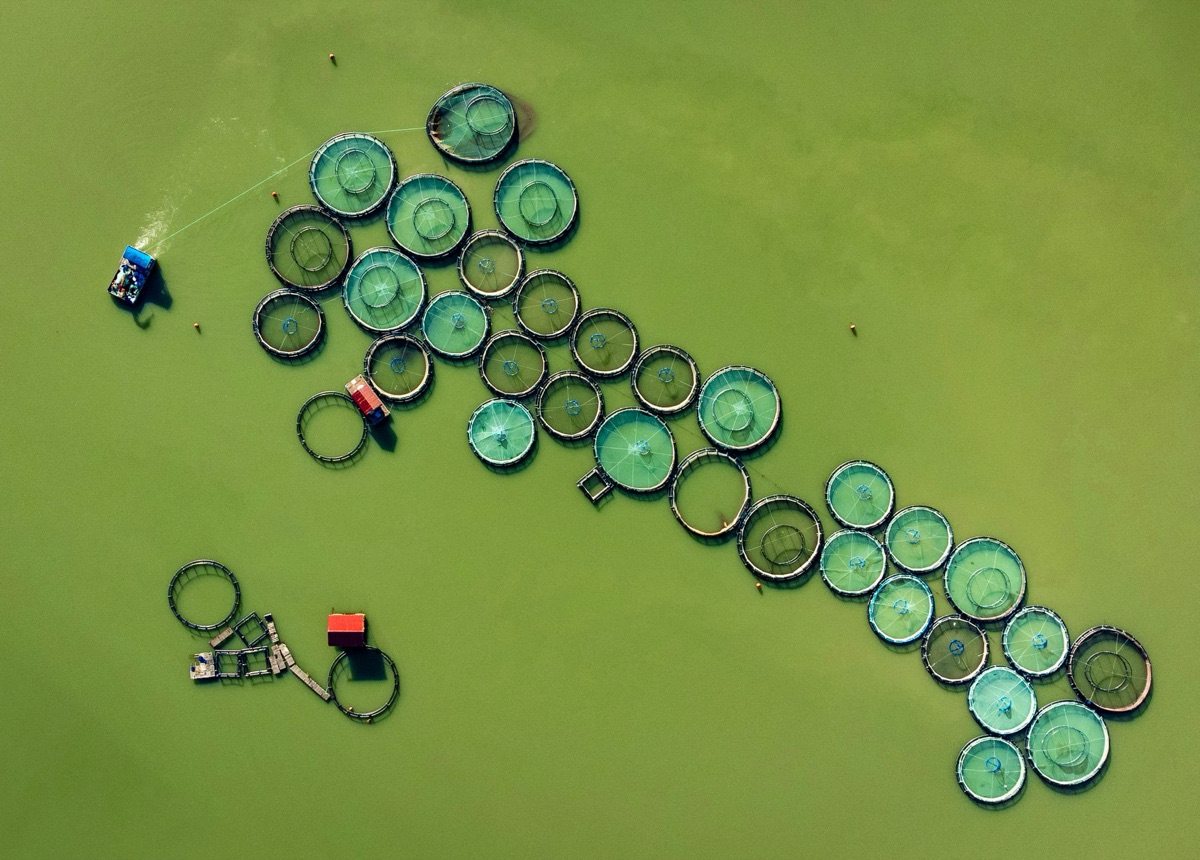
Why is the ocean's pantry running dry?
A fisherman stands on a weathered pier at dawn, looking out at a horizon that feels increasingly empty. He pulls a heavy, salt-crusted net onto the deck, but the haul is lighter than it was twenty years ago.
For decades, the ocean was seen as an inexhaustible pantry, but the reality of dwindling wild stocks has changed the math of global food security.
The primary driver of this shift is the relentless growth of the human population, which necessitates a massive increase in protein consumption.
While wild-capture fisheries once provided the bulk of our seafood, these traditional methods face severe depletion and tightening regulatory constraints to prevent total ecosystem collapse.
To bridge this gap, aquaculture has transitioned from a supplemental food source to a primary pillar of global protein production. This transition is not just a trend but a necessity to prevent a global protein deficit.
But as we move from the wild sea to controlled pens, a new set of problems emerges.
How did aquaculture become a global giant?
In a bustling shipping port, massive crates of salmon are loaded onto refrigerated trucks, destined for dinner tables halfway across the globe. The air is thick with the smell of salt and diesel as cranes lift heavy containers under the midday sun.
According to the Chinese Bureau of Fisheries, aquaculture harvests grew at an annual rate of 16.7% between 1980 and 1997.
This scene is a testament to how aquaculture has moved from a niche hobby to a massive industrial engine.
The historical trajectory of aquaculture shows an explosive upward curve. For example, the Chinese Bureau of Fisheries reported that between 1980 and 1997, aquaculture harvests grew at an annual rate of 16.7%, jumping from 1.9 million tonnes to nearly 23 million tonnes.
This rapid expansion set the stage for the global industry we see today.
Geography plays a massive role in who leads the market. In the realm of salmonids, production is heavily concentrated in specific regions. Norway produces 33% of the world's farmed salmonids, while Chile produces 31%.
This concentration highlights how certain species have become global commodities through specialized regional expertise.
| Region/Type | Market Share/Statistic |
|---|---|
| Norway | 33% of global farmed salmonids |
| Chile | 31% of global farmed salmonids |
| China (Historical) | 16.7% annual growth (1980-1997) |
However, this massive growth comes with a hidden cost that threatens the very water these fish live in.
Is fish farming actually sustainable? A researcher in a lab coat carefully tests water samples from a coastal cage, looking for signs of nitrogen runoff or unintended environmental impacts. She dips a glass vial into the turquoise water, noting the clarity against the morning light.
As aquaculture scales up, the industry finds itself at a crossroads between feeding the world and protecting the oceans.
One of the most significant environmental concerns is the reliance on wild-caught fish to feed farmed species. In certain aquaculture models, the energy transfer is inefficient; on a dry-dry basis, 2–4 kg of wild-caught fish are needed to produce just 1 kg of salmon.
This creates a "protein trap" where aquaculture could potentially deplete the very wild stocks it seeks to supplement.
Disease management also poses a constant threat to production stability. High-density environments can facilitate the rapid spread of pathogens, which can devastate local ecosystems if not managed with extreme precision.
Balancing these ecological limits with the need for high-volume production remains the industry's greatest challenge. But it isn't just the environment at risk; it is the people behind the nets.

Who is actually feeding the world?
In a coastal village, a group of workers prepares nets and feeds, representing a workforce that is often invisible to the end consumer. The sun beats down on the docks as they haul heavy bags of feed, their movements synchronized by years of shared labor.
According to the FAO, women accounted for nearly 14 percent of all people directly engaged in the fisheries and aquaculture primary sector in 2016.
The economics of aquaculture are deeply tied to labor and the social structures of the regions where it operates.
The workforce is diverse, reflecting the global nature of the industry.
This demographic presence is vital for the economic stability of many coastal communities.
Technological efficiency also dictates the economic viability of various species. For example, stocking densities vary significantly by species to optimize growth and health.
- Assess the specific species requirements (e.g., cold water vs. warm water).
- Calculate the optimal stocking density to prevent disease.
- Monitor water oxygen levels and nitrogen levels daily.
- Adjust feed ratios based on the specific growth stage of the fish.
For instance, Atlantic salmon often see stocking densities ranging from 8 to 18 kg/m3, whereas Chinook salmon are typically kept at lower densities of 5 to 10 kg/m3. While these numbers look efficient on paper, maintaining them requires constant vigilance.
Can we trust the label on the package?
A consumer stands in a supermarket aisle, squinting at a label to ensure the fish they are buying meets their personal health and environmental standards. They turn the package over, checking the fine print under the bright fluorescent lights of the grocery store.
In 2008, the National Organic Standards Board allowed farmed fish to be labeled as organic provided less than 25% of their feed came from wild fish.
As aquaculture grows, so does the scrutiny regarding the quality and purity of the product.
Addressing potential contaminants is a priority for both regulators and consumers. To maintain market trust, rigorous labeling and certification standards have been established.
For example, in 2008, the US National Organic Standards Board allowed farmed fish to be labeled as organic, provided that less than 25% of their feed came from wild fish.
These standards are designed to differentiate premium products and ensure that "organic" or "sustainable" claims are backed by measurable data. As the industry evolves, the ability to meet these tightening global standards will determine which producers can access premium international markets.
But what happens when the technology changes the game entirely?
What does the future of seafood look like?
An engineer monitors a high-tech, closed-containment tank where water is filtered and recycled in a controlled environment. The hum of the filtration system is constant, a low-frequency vibration that fills the sterile, blue-lit room.
This represents the cutting edge of aquaculture—moving away from open-water cages toward systems that minimize environmental interaction.
The next decade will likely be defined by innovations such as closed-containment systems and the development of alternative feeds (like algae or insect-based proteins) to solve the wild-fish-dependency problem. These technologies aim to make aquaculture a truly circular and sustainable endeavor.
Beyond technological fixes, global cooperation on resource management will be essential. Diversifying into new species and expanding into offshore aquaculture will require a delicate balance of international policy, environmental science, and economic incentive.
When I first looked into the logistics of large-scale aquaculture, I was struck by how much of it felt like traditional farming—just underwater. It is easy to forget that we are essentially managing a biological engine that requires constant, precise input to stay running.
It is important to note that these technological solutions are not a silver bullet. High-tech systems often require massive capital investment, which can exclude smaller-scale traditional farmers from participating in the new economy.
There is always a trade-off between extreme efficiency and local accessibility.
#




Comments 0