Fisheries Management: Protecting Stocks Beyond 80% Stress
"The ocean is not an infinite pantry; it is a living system that requires precise mathematics to remain full."
How do we decide exactly how many fish can be pulled from the sea without destroying the population forever? The answer lies in the delicate balance of Maximum Sustainable Yield, a scientific concept that dictates the survival of our global food supply.
Key Takeaways
* MSY represents the theoretical maximum catch rate that can be harvested indefinitely without depleting a fish stock. * Modern fisheries management relies on dynamic models because simple growth curves cannot account for real-world complexities. * Global fisheries face varying levels of pressure, with significant portions of inland basins already under moderate to high stress. * Successful management, like recent milestones in Abu Dhabi, proves that scientific oversight can restore and maintain healthy aquatic ecosystems.
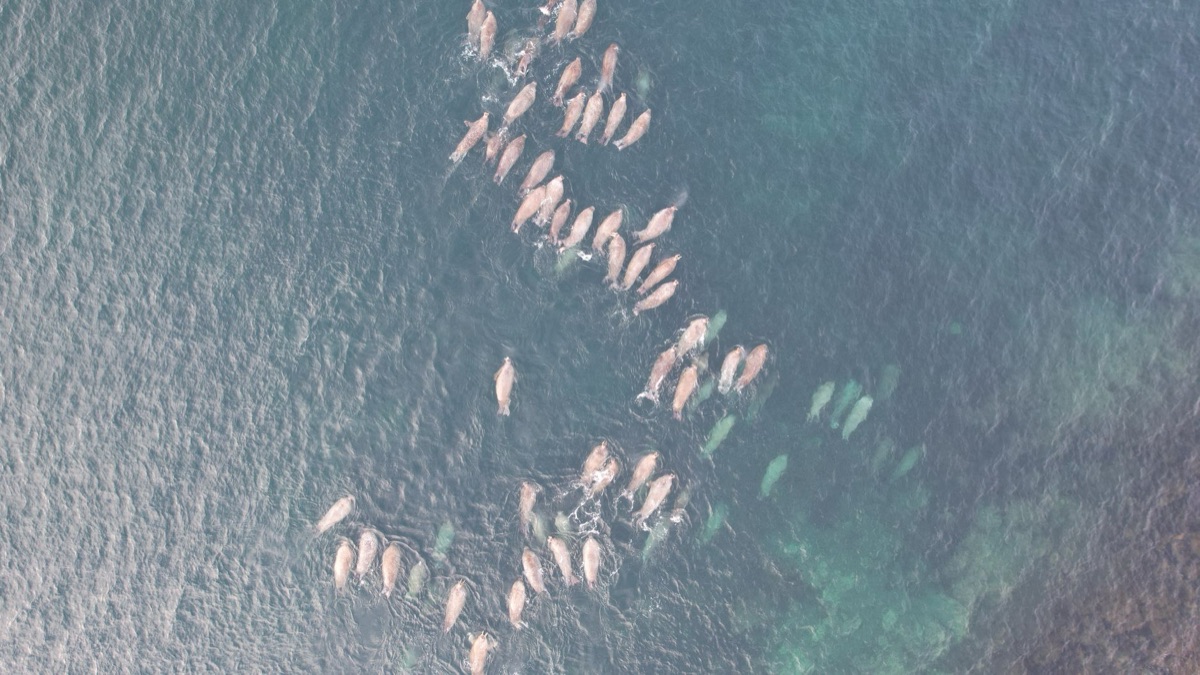
What is Maximum Sustainable Yield (MSY) and Why Is It Crucial?
At dawn, a weathered fisherman grips the salt-crusted railing of his trawler while watching the heavy nets rise from the dark waves.
A fisherman stands on the deck of a trawler at dawn, watching the nets rise while calculating if the haul will sustain his family for another month. He is participating in a high-stakes biological equation that has played out across every ocean for centuries.
Maximum Sustainable Yield (MSY) is defined as the theoretical maximum average annual catch that can be taken from a fish stock without causing the population to decline. It is the "sweet spot" where the rate of harvest matches the rate of natural reproduction.
Historically, the scale of human interaction with these resources has been massive. Recent assessments by the United Nations Food and Agriculture Organization (FAO) of the state of the world's fisheries indicate a leveling off of landings in the 1990s, at about 100 million tons.
This plateau suggests that we reached a limit of what the oceans could naturally provide under existing pressures.
The reality of modern exploitation is even more pressing. More than 80% of the world's commercial exploitation of fish and seafood comes from natural populations. Because we rely so heavily on wild stocks rather than aquaculture, the stakes of getting the MSY calculation right are incredibly high.
The ultimate goal of fisheries management is to transition from reactive depletion to proactive, science-based harvesting. Without a target like MSY, fishing becomes a race to the bottom where the last person to pull up an empty net loses everything.
But how do we actually apply these numbers to a moving target?
How can I move beyond theory to practical application? Late at night, a scientist rubs her tired eyes while staring at the flickering glow of a computer screen filled with shifting data curves.
A scientist sits in a dimly lit lab, staring at a computer screen filled with fluctuating growth curves and population density maps. She knows that a single mistake in these numbers could lead to a total fishery collapse.
While the concept of MSY sounds straightforward, applying it to a living, breathing ocean is incredibly complex. Theoretical models often suggest that MSY occurs at approximately 30% of the unexploited population size.
This means we aren't just looking at how many fish we can catch, but how many we must leave behind to ensure the next generation.
Setting quotas involves significant risk assessment. Managers must decide where to set the line on the spectrum of harvest.
Fishing at the upper end of "acceptable" ranges carries disproportionately higher risks compared to lower levels, even though the immediate yield might look more attractive on a balance sheet.
To manage this, biologists use specific stock assessment indicators to track health. A healthy stock earns points for having its fishing status clearly known and for not being overfished.
Managers often look at whether a stock is at 80% of its MSY to determine if the population is robust or nearing a danger zone.
Because fish populations change due to temperature, migration, and disease, simple logistic models are no longer enough. Modern management requires dynamic, real-time adjustments to prevent the math from failing the environment.
However, these numbers don't exist in a vacuum; they exist in a world under constant threat.
What is the current state of global fisheries under pressure? A research vessel cuts through choppy gray waves in the North Atlantic, its crew monitoring sensors that track the health of the seabed below. They are looking for signs of a system under stress.
The distribution of fishing pressure across the globe is uneven.
This imbalance shows that while some areas are relatively untouched, others are being pushed to their limits.
Beyond direct fishing, other environmental factors threaten the stability of these stocks. In many regions, habitat degradation is a primary threat, accounting for 54% of issues in inland fisheries, followed by pollution at 27%.
These factors can lower the "maximum" in MSY by reducing the environment's ability to support growth.
However, there are success stories that prove management works. For example, Abu Dhabi’s Sustainable Fisheries Index reached 100% by the end of 2025, marking a milestone in the emirate’s fisheries management efforts, according to the Environment Agency – Abu Dhabi.
This demonstrates that with rigorous oversight, recovery and stability are possible.
The scale of the challenge remains daunting. Because the majority of our catches rely on natural productivity, any failure to manage these stocks correctly threatens global food security.
But what happens when the math meets the messy reality of human life?

Beyond Catch Limits: Holistic Management Challenges
A coastal village watches the horizon, where the local fishing fleet prepares to depart. The community knows that the health of the sea is tied directly to the health of their children.
Effective management cannot just be about counting fish; it must be holistic. While MSY provides a target for catch limits, it does not account for the complex web of life that supports the fish.
Pollution, climate change, and invasive species can shift the entire baseline of what a population can sustain.
To understand how to manage these resources, it helps to compare the different approaches to fishery health.
| Feature | Traditional Approach | Modern MSY-Based Management |
|---|---|---|
| Primary Goal | Maximize immediate catch | Ensure long-term population stability |
| Method | Open access / Unregulated | Science-based quotas and limits |
| Risk Level | Extremely high (Overfishing) | Controlled and monitored |
| Focus | Single species | Ecosystem and population health |
Effective management requires a multi-step approach to ensure the math stays accurate and the environment stays healthy.
- Conduct Robust Stock Assessments: Use biological data to determine the current population size and growth rate.
- Calculate the MSY: Determine the theoretical maximum catch that the population can sustain.
- Set Catch Limits (Quotas): Establish harvest levels that allow for a buffer, often aiming for a percentage of the MSY.
- Collect Real-Time Data: Continually gather biological and environmental data to adjust quotas based on real-world changes.
- Protect Habitats: Ensure the environment can support the recruitment of new fish to maintain the population.
I once visited a small fishing cooperative where the local leaders refused to fish during certain seasons, even when the catch was plentiful. They weren't just following rules; they were protecting their future. They understood that if they took everything today, there would be nothing for tomorrow.
It is important to note that MSY is a theoretical target, not a guarantee. It assumes a level of stability that doesn't always exist in nature. If environmental conditions change rapidly, a catch level that was once "sustainable" can quickly become destructive.





Comments 0