Tropical fish tank setup: Tips for best ecosystem care
"The balance of a water-filled world depends on the invisible work of bacteria and the careful management of every single drop."
Maintaining a tropical fish tank ecosystem requires consistent monitoring of water volume and temperature to ensure biological stability. This guide is for hobbyists managing small nano reefs or large glass displays who need to understand maintenance cycles and structural limitations.
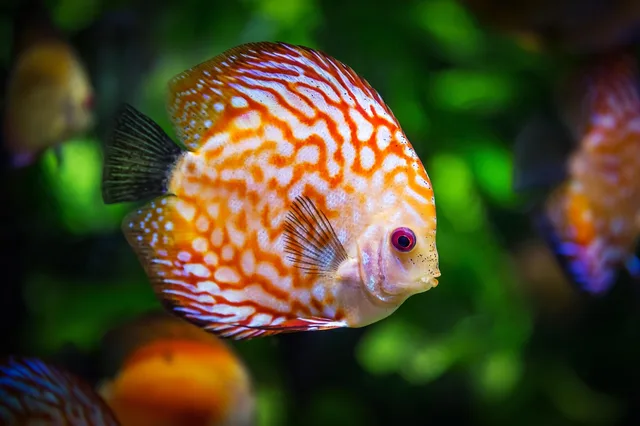
Key takeaways include managing the biological load through slow population increases, understanding the physical weight constraints of water, and recognizing the standard components of modern aquarium construction.
What makes a tropical fish tank setup?
A hobbyist carefully inspects the glass panes bonded together by 100% silicone sealant. These structures often feature plastic frames attached to the upper and lower edges for decoration.
While a small glass bowl might hold less than 1 liter, most standard glass aquaria serve sizes up to about 1,000 litres (260 US gal; 220 imp gal).
The physical scale of a tank dictates the level of care required. I noticed that smaller volumes require much more frequent monitoring due to rapid changes in chemistry.
While a small glass bowl is an option, larger volumes are restricted by the weight of water, which is 1 kilogram per litre (8.345 lb/U.S. gal).
- Select a suitable tank size.
- Install a filtration system.
- Add substrate and decorations.
How can I maintain aquarium health?
A technician scrubs the gravel and substrate to clear away debris. Typical weekly maintenance includes changing around 10–30% or more of the water. Some hobbyists manage to avoid this entire process by keeping the environment somewhat self-sufficient.
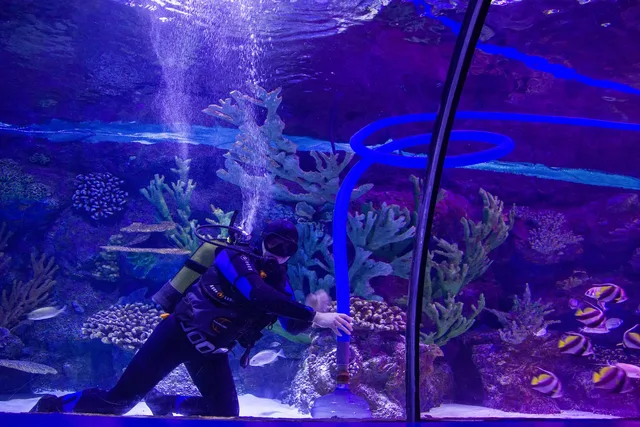
To maintain aquarium health, one must prevent sudden spikes in waste. A common method involves "slow growth," which entails slowly increasing the population of fish over a period of 6 to 8 weeks.
This specific duration gives bacteria colonies time to grow and stabilize with the increase in fish waste.
I find that the second step is the most time-consuming.
According to The Food and Agriculture Organization, the 2017 record includes 34%.
Is there a guide for nano reef tanks?
A collector carefully places a single coral into a reef aquaria under 100 litres (26 US gal; 22 imp gal). These specialized systems, termed nano reefs when used in reefkeeping, have a small water volume of under 40 litres (11 US gal; 9 imp gal).
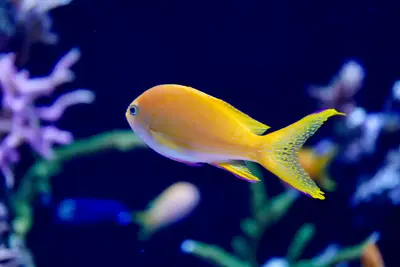
When following a tropical fish tank guide, temperature control is vital. Most fish and plant species tolerate only a limited temperature range. Tropical aquaria, with an average temperature of about 25 °C (77 °F), are much more common in the hobby.
What are the best practices for fish tank stability?
A scientist monitors the chemical levels to ensure the water remains stable. In the United States, 40% of aquarists maintain two or more tanks. This dedication to multiple systems requires a rigorous approach to aquarium environment control.
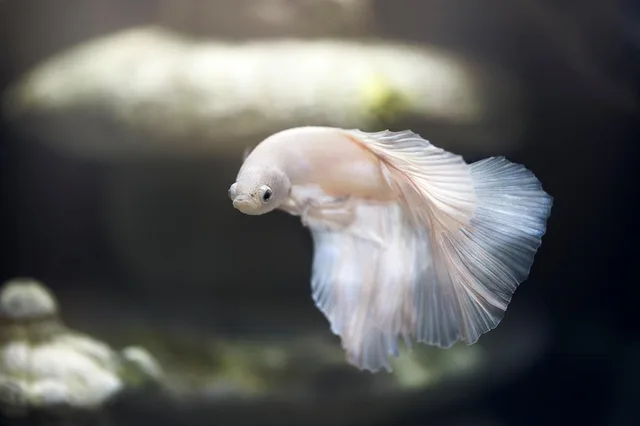
To achieve the best practices for fish tank stability, one must consider the scale of the system. For instance, while most home setups are manageable, the Georgia Aquarium features an individual aquarium of 6,300,000 US gallons (24,000,000 L).
Does aquaculture technology matter for this hobby?
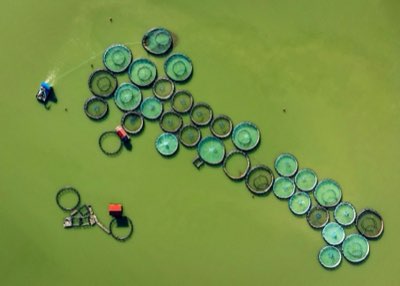
An engineer reviews the latest filtration technology used in commercial facilities. According to The Food and Agriculture Organization, "in 2017, 34 percent of the fish stocks of the world's marine fisheries were classified as overfished".
This level of expertise highlights the complexity of managing aquatic environments.
The scale of professional aquaculture differs significantly from home setups. While a home enthusiast might focus on a nano aquarium (less than 75 litres or 20 gallons), industrial systems manage vast populations.
How much effort is required for professional aquarium care?
An aquarist carefully feeds the fish while recording the daily observations. According to Animal Care and Service, the average salary for an aquarist was just under $24,000 a year, or $11.51 per hour, in 2018 when with ‘Animal Care and Service Workers’.
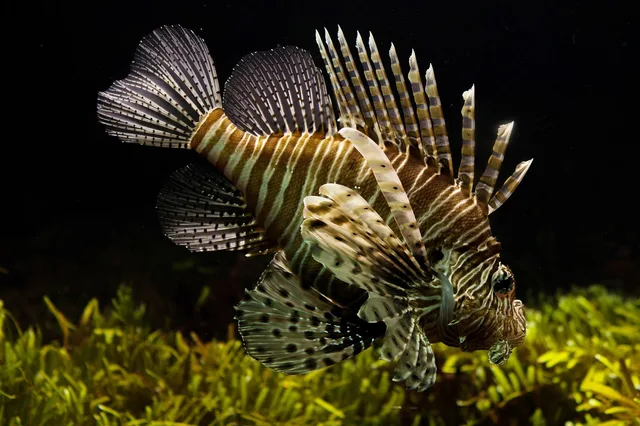
Professionalism in this field requires understanding both biological and mechanical systems. I have seen how even small errors in water chemistry can disrupt an entire ecosystem.
One limitation of home setups is the physical restriction of large aquaria, which is limited to a maximum of around 1 cubic metre in volume due to internal water pressure and weight.
The subject here is Tropical fish tank setup.
The same subject is also called Fish tank ecosystem care.
This part also covers How to keep fish tank stable.
This part also covers Real case study fish tanks.
Related
- How does fish breeding ecosystem impact change over time?
- Aquarium food balance guide how to master feeding practices
How does water volume affect the balance of the system?
Water volume determines the speed of chemical changes within the tank. Smaller volumes, such as those found in nano reefs under 40 litres, experience rapid shifts in chemistry compared to larger setups. This condition requires more frequent monitoring to maintain stability.
- Monitor small volumes more often to prevent rapid chemical changes. 2. Increase fish populations slowly over 6 to 8 weeks to allow bacteria to grow. 3. Perform weekly water changes of 10–30% to manage waste.
What are the structural limitations of large tanks?
Internal water pressure and weight limit the size of home aquaria. Most home setups are restricted to a maximum of around 1 cubic metre in volume. This limitation exists because the weight of water is 1 kilogram per litre.

Comments 0